Creating a Successful Experience for Your Remote Team

According to a recent global study by Logitech, more than 43% of employees are expected to work from home part or full time. Certainly, hybrid work environments are here to stay. And with the increase in remote workers, a smart balance of collaboration is critical. So, what does that look like?

7 Tips for Creating Successful Remote Teams

1. Space

Remote workers will need a comfortable space at home to work in, so you may need to budget for a new desk and chair for their homes and/or be clear in your expectations of what you provide and what the employee will be responsible for.

2. Workflow

You will need to make sure you are using efficient workflow and task management tools so that everyone is on the same page.

For example, you could use Workzone, Trello, Jira, or others just as effective. Then everyone will know when things are due and when someone is done with a project.

3. Daily Communication

Include remote workers in your daily communication.

They might feel isolated and alone if they are used to the banter and camaraderie of the office. Make sure you keep the lines of communication open so they can ask questions, provide information, and be a part of planning for different events and projects.

4. Time

Ensure employees know when their start and stop times are so that they don’t go over their allotted time, costing you money if they are paid by the hour.

Not only that, but you don’t want your employees to get burned out. Most people say this is the hardest part of working at home–knowing when to quit for the day. Many people forget the time and focus on their projects.

5. Structure

Structure is a critical step in making remote work successful.

Although working at home is more flexible, things can go array without structure. You will need to have standards and specific goals for remote workers, so they know what is expected of them. If you expect them to work 9 to 5, make sure they know that. Otherwise, they may think it’s okay to start at noon as long as they get their hours in.

6. IT Safety

Recently, the US Secret Service issued an alert warning of fraudulent emails related to Covid-19 that contain malicious attachments.

This is a good reminder to practice the same standard of privacy and protection of information no matter where your team is working.

7. Internet Usage

Remember that while employees are working at home, their spouses and children might also be using the Internet.

This means they may have a slower connection and might need to be taught how to best deal with this. Consider setting up additional connections for employees or advising them on connecting and disconnecting various devices when not in use.

We can all agree that remote working is here to stay for many people, and for others, we never know what the future holds. With that said, it’s nice to know we are here for each other. Our printing firm is here to take the weight off your shoulders when it comes to professional printing. We are your partner when it comes to printing high-quality designs and styles. Need something specific? Check out our website today!
Direct Mail is Not Failing. Here’s Why.

Direct mail is king in advertising.

It’s direct, in your hands, and grabs attention right away. There’s no cold calling, knocking on doors, or guessing if your direct mail made into your customers’ hands.

In a 2020 consumer survey, 71% of people reported reading the ads that come in the mail. And 54% say that direct mail ads motivated them to try a new business.

The Direct Mail Comeback

Postcards are an excellent example of direct mail that has made a comeback in the last few years due to the pandemic leaving people at home more.

Not leaving their homes meant people weren’t out searching for a better deal. Instead, they were at home, opening their mail and seeing great offers sent directly to them. Consumers learned that direct mail is a great starting point for their shopping.

The Personal Touch of Direct Mail

Direct mail has the advantage of personalization by putting the recipient’s name on it.

This connection is better than a TV commercial or online ad because readers know the offer is intended directly for them. Right now, there are programs designed to target just the right market so that your return on investment is spot on. You can pick people of the correct ages and genders for your product and tailor it to people who typically respond well to postcards and other direct mail.

During the pandemic, consumers were directed with QR codes to download menus everywhere. And when you add QR codes to direct mail, it adds a little more social interaction with the mail. It gets people to take the next step and download your information, and it works wonders.

The Rise of Digital Fatigue

Digital fatigue is real and prevalent.

In fact, 75% of consumers report being overwhelmed by the number of digital ads they see daily. This is good news for direct mail marketing because it won’t tire out the consumer with ads blinking in front of their faces. Instead, it presents a calm way to ask for their business.

Direct mail has a median ROI rate of 29%, which is only 1% behind social media. It’s proof that direct mail is still in the running, according to Neil Patel. “Like hot baths and candlelit dinners, direct mail has become romanticized in our culture,” Patel says. Direct mail campaigns let people know you want their business specifically, instead of sending out a broad email blast or digital ad.

According to the US Postal Service, 54% of people surveyed tried a new product or business in a six-month period in 2020 because they received a mail piece. That’s a great opportunity that many businesses are missing when they only focus on online ads.

Direct mail will always remain important to the business world, whether you use a postcard, brochure, or a letter directed to a specific type of person. We are here to help you in your efforts to run a direct mail campaign. Check us out today!

Get Organized with Kanban Method Basics

Ever feel overwhelmed by your to-do list? The Kanban method might help.

Kanban comes from the Japanese word that translates into ‘visual signal,’ to convert work tasks into a visual format and limit the number of tasks concurrently being worked on while increasing transparency and speed.

Kanban takes a group-focused approach and encourages everyone on the team to be a leader. Here’s how it works.

Kanban Boards

Kanban boards are the format of which kanban is worked off.

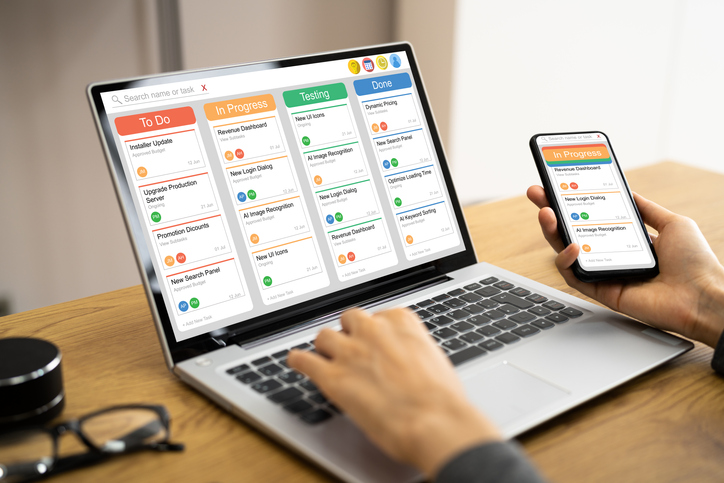
These boards can be virtual or physical, and they consist of columns that break the workload up into sections. For example, you can have to-do, in-progress, and done columns. 

Within the columns, there are cards. The cards represent each work item. They move from column to column, left to right, beginning from the backlog (a queue of work to be done) to the finished stage.  

Kanban boards are designed to help limit work in progress, which helps decrease lead time.

Kanban Cards

Kanban cards provide all the necessary information, including a title, description, owner, due date, time logged, and workflow stage.

The history and information are updated as the card progresses through the workflow, increasing transparency. 

The cards (or tasks to complete) can generate from customer-based feedback or from within the company at meetings. All team members should be empowered to create a card. 

The time it takes to complete each card should be calculated. You don’t want a card to resemble every minute task, but you also don’t want the card to take two weeks to complete. The optimal time for each card is about one day or 6-8 hours. 

Kanban Work In Progress Limits

By enforcing work in progress limits, thereby limiting the amount of work your team can do at once, you’ll decrease your lead time.

This is because multitasking is inefficient, and time is wasted by switching between various projects. Enforcing work in progress limits helps foster a healthy workplace because your employees won’t be overwhelmed. Quality will increase because your employees can focus on one to two tasks at a time. Customers will be happy because of the high quality. 

Work in progress limits helps your team members say no, which may be challenging for some. When there isn’t any space on the kanban board to take on more work, saying no becomes easier, and an explanation backs it up. 

The recommended work in progress limit for your entire kanban board, according to Agile Coach Max Rehkopf, should be your team size (the number of people contributing on the kanban board) multiplied by one and a half or two. The recommended work in progress limit for each column is the number of people that look after each column multiplied by two. 

Pinpoint Bottlenecks

Kanban boards help you pinpoint bottleneck points in the workflow.

Bottleneck effects often arise from projects waiting on those with unique skill sets held by only a few team members. To help decrease bottlenecks, prioritize a sharing of skill sets. In this case, if there is a backup in the workflow, other team members can jump in to help. 

Getting Started

When first incorporating a kanban board into your workplace, it’s important to remember it’s not meant to revolutionize the workplace but rather provide a methodology to the current roles and responsibilities. 

Begin with a physical kanban board in a prominent location. Use sharpies, pens, sticky notes, etc., to put it together. This kanban board will serve as a conversation starter regarding how you work, write cards, and move through your work. These conversations lead to changes in the workflow. Once the company and employees understand the workflow, upgrade to a digital platform like Jira or Trello. This is helpful because you can share the workflow with people outside of your location. 

Kanban is a helpful visualization tool to help speed up the workflow process at your business by decreasing work in progress and providing a method to your work. Need to organize your print marketing? We can help!

6 Reasons Why You Need a Vacation

Taking time off can be difficult, especially if you fear things might stall or fall apart without you there.

But rest, and the time to unplug and recharge, are necessary indulgences.

Here are six reasons why vacations are necessary for being healthy and successful.

1. Production

There are many reasons to take time off. It makes you more productive to have time away from the grind. When you return, you feel refreshed and can spend those fresh eyes on sprucing up your marketing efforts or other things that need updating.

2. Physical Health

“People who take vacations have lower stress, less risk of heart disease, a better outlook on life, and more motivation to achieve goals,” according to Allina Health.

It’s a great way to stay healthy and vibrant. Just check out these statistics:

3. Mental Health

Taking time off from work is also a great way to boost your mental health.

Neuroscientists have found that “chronic exposure to stress can alter your brain structure and bring on anxiety and depression.” Give your brain a break by taking time off, in which you turn off your phone and social media. It will help heal your mind when it’s on vacation.

4. Reduce Burnout

It goes without saying that vacations help reduce burnout.

When you have time to step away and reflect, you can be more creative when you return. And when you are refreshed, you’re often filled with new, innovative ideas for your business.

5. Improve Relationships

Relationships benefit from vacations as well.

Most marriages are happier when there are mini-vacations and large vacations. Just time alone with your loved ones makes families thrive and can trickle down into one’s performance at work.

6. Reduce Stress

A study released by the American Psychological Association concluded that time off helps reduce stress because it removes people from the activities and environments that they associate with anxiety.

If you can’t take a vacation right away, take little breaks in nature. Take your lunch break outside in the sunshine. Or take a walk after work with a loved one. Take the long way home through a park, get out and walk a trail. But be sure to plan a real vacation soon to help you be the best version of yourself.

When it comes to your print marketing, plan to leave the stress to us!

The Benefits of Banners

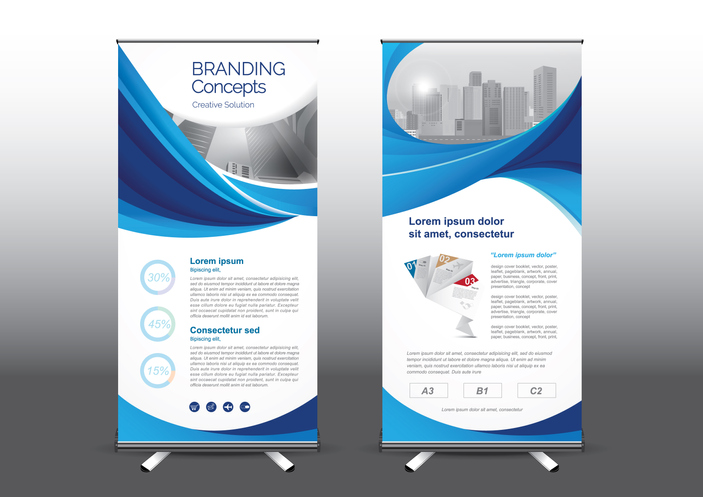
A banner is a large piece of fabric or flag used to advertise a business by displaying a slogan, logo, symbol, or promotional offer. It is one of the oldest forms of advertising, and it is still around today because it is low cost and effective.

Benefits of Banners

Banners have a wide array of benefits. Below is just the tip of the iceberg.

  • Visibility. Banners are highly noticeable. Pair it with an eye-catching design, and it’ll be hard to miss.
  • Positive response. Unlike t.v. or radio commercials where the audience can become quickly tired of the advertisement and eventually irritated, banners don’t have that problem. The audience can choose to look at the banner or not. Therefore, the chances of them becoming annoyed by it are lower than alternative forms of advertising.
  • Cost-effective. Compared to t.v. commercials or media advertising, banners are much more cost-effective. In advertising, you’re going to want to spend as little as possible to generate the most sales. Banners are a good intersection.
  • Reusable. If you make sure to use durable, high-quality inks, your banners should be reusable time and time again. This is perfect for local events, trade shows, and social gatherings. The banner’s reusability adds to its cost-effectiveness.
  • Easy. Getting banners printed is usually just a call away!

Perhaps one of the greatest benefits of banners is their vast customizability.

Ways to Customize Banners

No two banners are alike because they are customizable.

  • Size. Banners come in various sizes ranging from 2’ wide by 4’ high to 6’ wide by 30’ high. The standard size is 6′ wide x 3′ high. The size you end up choosing largely depends on where you’re placing your banner.
  • Portrayal. Banners can come single or double-sided. If you’re placing your banner against a brick wall, it’s probably best to go with the single side. But, if your banner will have both sides exposed, then it’s best to go double-sided.
  • Material. Banners can come in matte, gloss, fabric, mesh, or vinyl, depending on your printer. The material you choose often depends on the placement of your banner. For example, if the banner is outside and needs to survive the weather, it is best to choose more durable options.
  • Finishing. Depending on how you want to hang your banner, you can choose grommets, hems, or pole pockets. Grommets are the holes on the outside of the banner for it to hang. Usually, you can select the material of your grommets, such as brass, stainless steel, or plastic.
  • Viewing distance. Depending on your printing company, the quality of the design can be adjusted based on how close-up people will be viewing your poster. If they’re only going to be seeing it from far away, there’s no point in wasting money on a detailed design.
  • Design. The banner’s design is highly customizable, and it’s what makes your banner unique and stand out. Using excellent design skills helps draw in customers’ attention. Try incorporating graphics, a memorable logo, complementing color schemes, patterns, and your unique selling proposition. A unique selling proposition states why customers should buy from your business over your competitors.

Banners are the perfect addition to your advertising campaign for customizability, effectiveness, and price!

How to Find and Communicate Your Unique Selling Proposition

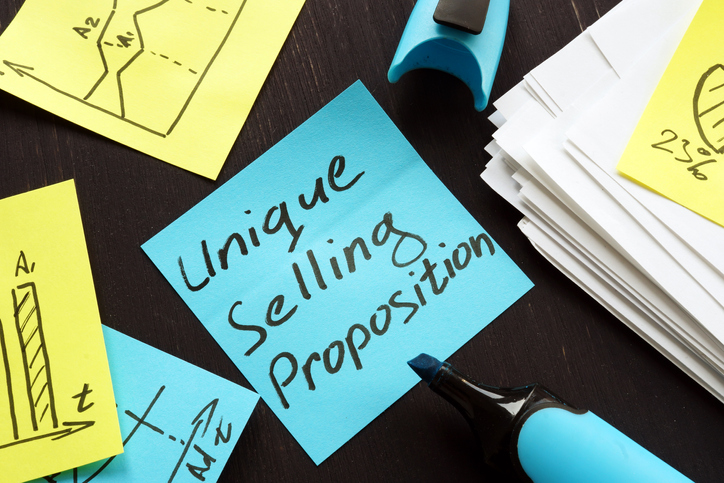
A unique selling proposition, or USP, differentiates your business from your competitors. It helps you stand out and is why customers decide to buy from you over competitors.

In online markets, where there are many competitors, it’s essential to stand out. USPs identify your target market, why your business exists, and how you want to impact the world uniquely. 

The USP is the intersection between what your customers want and what your business does well. What you sell doesn’t always have to be unique, but the message you focus on does. 

Finding Your Unique Selling Proposition 

Finding your USP can be challenging. The following tips should help: 

  • List your differentiations. Make a list of what differentiates you from your competitors. Be as specific as possible. Brainstorm as many options as possible.
  • Research competition. Research your competitors. Find out who they are and their USPs. Find the gaps to see your niche. Identify the target market’s pain points. How can your business uniquely help them?
  • Quality or price. These are the two main ways your business can stand out. If your USP is based on quality, perhaps focus on your product’s superior materials or ingredients, craftsmanship, or uniqueness. If your USP is based on price, advertise the lowest price guaranteed, price matching, free shipping, bulk discounts, or special offers.
  • A/B testing. After brainstorming, perhaps your company has come up with two potentially good USPs. To find which one is better, utilize A/B testing to determine which one generates a better customer response.
  • Create a positioning statement. An example, from Shopify: [Your brand] offers [product/service] for [target market] to [value proposition]. Unlike [the alternative], we [key differentiator].

Communicate Your Unique Selling Proposition 

Because your USP draws customers to buy from you over your competitors, it must be communicated effectively. It shouldn’t be complicated, but it should be memorable.

You can use many platforms to make sure customers know your USP. 

  • Banners. Low cost and effective, when placed in a high traffic area with a compelling design, banners will catch the eye of customers.
  • Flyers. These are easy to hand out and better target your ideal audience. Share with customers who’ve already bought from you or those who fit your target audience.
  • Social media. Depending on who you’re trying to connect with, various platforms will better enable you to reach your target audience. There are many possibilities, including Facebook, Instagram, Twitter, Snapchat, and TikTok.
  • Search marketing. When people type words into a search engine platform such as Google, Yahoo, or Bing, you want your business to be at the top of the list. Search marketing includes strategies you can utilize to get you to the top. That way, when customers search for the product you sell, you’ll rise above your competitors, leading to more sales. Make sure your USP is prominently displayed on your home page. 

Effectively advertising your USP will boost sales. 

Unique Selling Proposition Examples 

Sometimes the best explanations are through examples. The market for shoes is crowded and competitive. But by having a unique selling proposition, the following companies can stand out and generate sales by appealing to customers’ values. 

  • Zappos’ unique selling point is free returns with their online store. This helps reduce customers’ risk aversion, translating into more sales. It also shows that Zappos is willing to stand by their shoes, attesting to the quality.
  • Toms Shoes’ unique selling point is that they donate to a child in need for every shoe the customer buys. This will make the customer feel as if they are doing a good deed by purchasing a shoe. They’ll feel good because of their new shoe and knowing that someone in need has a new shoe too.
  • Nike’s unique selling point is the best quality shoes for athletes, which is communicated by sponsorships with star athletes. The customers look up to star athletes, and they begin to associate Nike with star athletes and, therefore, success. When they’re looking for a high-quality shoe, they’ll think of Nike. 

Your unique selling proposition helps your business stand out from your competitors. It answers the question, “Why should I buy from you?” Your sales will go up once you have a compelling answer to that question. 

Using Direct Mail to Promote Your Website

Both direct mail—the printed word—and websites are essential in promoting your business.

So, how does it work? What’s the secret to using direct mail to promote your online presence? Let’s take a look.

Don’t rely on Google to sell your site to anyone. Just because you have a website doesn’t mean you will become an overnight success. There are so many websites and businesses competing for consumers’ attention that you will need a little more help than just having a site.

As Barry Fieg, author of “Streetwise Low-Cost Web Site Promotion” says, “Google doesn’t care about your sales. Nor does Google help you target your market.”

Fieg says two things have to happen: First, you need to get people to your site. Second, you need to convert them from surfers to buyers. And, according to studies, you have about seven seconds to grab peoples’ attention.

And this is where direct mail comes in.

Direct mail can lead people directly to your site.

Direct mail prepares prospects and clients for what they are about to see on your site.

You can tease them with a little bit of information in the direct mailer. Then, you can elaborate on it when they go to your website. You could show people the details of your product, give a tour of your business, or show options that you offer in real-time.

Direct mail allows you to target the exact people you want to reach. 

You can pinpoint your audience, send direct mail to them, and lead them right to your site online.

Direct mail is like a personal invitation to your guests to see what you offer and to buy it online. Most people actually appreciate the fact that you sent them something directly in the mail, versus in a quick email, and it has more of a personal touch.

Direct mail allows recipients to engage with you on their time.

If you send out postcards, you allow customers to carry that information with them until they sit down in front of the computer.

Postcards are convenient, catchy, and direct. It doesn’t take long to get someone to punch in your website address now that it’s in their hand. And if your direct mail is creative, it will grab people’s attention right away.

Direct mail is preferred over email.

People get lost in hundreds of emails a day and often delete them without truly looking them over.

But direct mail is different. It is tangible, and it gets noticed.

Successful businesses realize that there needs to be more than just an online presence; direct mail is the transition from advertising to buying. In a recent Info Trends study, people actually preferred direct mail three times as much as receiving emails.

Direct mail is cost-effective.

Direct mail is cheaper than radio ads, which disappear in 30 seconds, and it has a longer shelf-life than TV ads.

Direct mail can be read over and over, even if it’s just sitting on a desk, and it commands attention.

No matter what your direct mail is—whether it’s postcards, catalogs, brochures, flyers, or other items—the tangible mail is worth the extra effort to drive people to your website. You can’t rely only on search engines to bring you virtual traffic.

If you need fresh, new ideas, we are here to help make you even more successful. Reach out today!

Decrease Clutter for a Happier, Healthier, More-Productive You

Clutter can be detrimental to your success.

A messy desk and office may seem normal, but it is a problem that can make you less successful.

According to the National Association of Professional Organizations, paper clutter is the number 1 problem for most businesses. Studies show the average person wastes 4.3 hours per week searching for papers, which not only adds stress and frustration, but it also deters concentration and creative thinking.

Studies also show that 75% or more of all physician visits are stress-related, so when you unclutter your office, you will not only increase productivity, security, and profits but reduce overall stress and medical care costs.

Stop the Clutter

Here are a few ideas on stopping the clutter and getting organized practically.

  • Make a commitment to getting clutter under control. Make an appointment with yourself daily and weekly. Every night before you go home, unclutter your desk so that 80% of your desk shows. Every week, pick a day to organize your desk a little longer.
  • Get rid of anything on your desk that you don’t use regularly. This is the first step to uncluttering your office area.
  • Limit the number of personal items, such as photographs and knick-knacks. Try to stick with one or two items so you don’t get distracted and to free up more space.
  • Instead of dumping papers in piles on the desk, use a desktop organizer and color-coded files. Be diligent about filing when new papers come into your office. If you get behind a little, try to end the day by organizing them into the appropriate folders.
  • Try to handle emails and papers only once. Decide how to respond right away, so you don’t have to rethink it and stash it somewhere on your desk.
  • Have permanent places to store ink cartridges and other office supplies so you can easily see what you need and what you already have. When things get messy, it’s easy to re-purchase items because you aren’t aware you already have them.
  • Shred old papers that are no longer needed. This is a great way to stay on top of the clutter.
  • Try to eliminate sticky notes, as they make things messy and cluttered. Make files on the computer if you need to recall something. Or have a notebook with passwords and other important information you may need.

No matter if your desk and office are slightly messy or are disaster areas, learning to unclutter will help ease your mind and make you more efficient. At our printing firm, we get things done efficiently and professionally. We are here to help you stay on top of your latest projects. Reach out today!

10 Ways to Get People to Respond to Your Marketing Efforts

Marketing takes time and money to execute well, which means it needs to hit the mark and provide a good return on investment.

Here are ten ways to ensure your marketing efforts get the response you’re looking for. 

1. Find your target market.

It’s great to think that your business is for everyone, but it’s also unrealistic.

Marketers need to focus on the correct gender, age, profession, and so forth. That way, you know how to “talk” to them. Keep it real, and focus on who actually walks in your doors.

2. Point out the advantage of doing business with you.

Do your clients get freebies or a discount? Or maybe they get a free consultation?

Focus on the items that will get your prospects and clients to your door quicker. Offer them something unique that other people can’t get. If you target your market with direct mail, you can send specific offers to people you want to reach.

3. Find your niche and focus on it.

What makes your company special? How are you different from the competition? Show people how your company is doing business in a new, innovative way.

4. Target repeat customers.

Remember to target repeat customers rather than always looking to acquire new ones.

Clever marketing gurus find ways to include repeat customers and entice them to come back.

5. Follow up on your marketing.

Use a calendar to track when certain people have received their direct mail piece or other marketing, and then call on them.

Sometimes they just need an extra push along the way to get a hold of you.

6. Be personal with your marketing.

Make sure your target market feels special and knows you appreciate them and all their needs.

People are more likely to engage with advertising that they feel has been specifically tailored to them.

7. Create a hybrid campaign.

Direct mail is critical to most businesses’ success, but you’ll need to combine your efforts across multiple channels in today’s digital age. Use direct mail to point people to your website and online presence.

8. Test your marketing.

Rather than going all out right away, test your marketing on a small sample size.

Try mailing a small batch of direct mail to targeted customers. Then track it to see its efficacy before sending out the large campaign.

9. Use data points in your marketing.

Be sure to include codes on your promotional items so you can track your success. This will allow you to hone your advertising message and format to be more accurate.

10. Be patient.

While, of course, you want immediate responses, sometimes waiting is necessary to see if your efforts are working.

Remember that direct mail takes longer than clicking on a banner ad online. But the effort you put into your marketing will not go unnoticed.

Hone your advertising today with high-quality printing!

Reduce Work-Related Burnout with These Action Steps

Burnout is extreme fatigue often caused by work-life imbalance and a lack of social support.

According to Ohio State University, burnout can cause extreme physical and mental exhaustion and has been connected with many health risks, including early mortality, depression, coronary heart disease, and type 2 diabetes. 

Certain personality traits, such as pessimism, perfectionism, and type A tendencies, may be more at risk for burnout. According to Forbes, in a survey of 1,500 U.S. workers in 2021, 52% of respondents said they were experiencing burnout. 

Luckily, both employees and employers can take actions to reduce work-related burnout. 

Actions Employees Can Take to Reduce Burnout 

1. Be Honest with Your Employer

Be transparent with your boss to figure something out. Find positives within your job and practice gratitude by daily finding something about your job for which you’re grateful. Sometimes you just need to take a break and return with a rejuvenated mindset.

2. Find Activities that Fill You with Energy 

“You often feel tired, not because you’ve done too much, but because you’ve done too little of what sparks a light in you,” inspirational speaker Alexander Den Heijer said. 

It’s not always possible to avoid doing things that suck the energy out of you. But you must find something that you genuinely enjoy, something that leaves you feeling energized. 

It’s okay if you don’t know of any activities right now. Think back to activities you enjoyed in the past. Be adventurous and try out some new activities. Make these activities that ‘spark a light in you’ a priority in your life by planning them into your schedule. 

3. Find a Support Group 

Eventually, everyone struggles.

These moments don’t feel quite as debilitating when you’re surrounded by supportive people. Perhaps you already have a support group through friends, family, and/or activities. If so, work on being more comfortable reaching out for help when needed. 

If you don’t have a support group, try your best to find or create one. Go to events. Connect with people through mutually shared interests. Be a little bit vulnerable and adventurous. 

Employees can only do so much to reduce work-related burnout. Employers should also be aware of burnout and actions to help their employees. 

Actions Employers Can Take to Alleviate Employee Burnout 

1. Hire Great Managers 

Managers are a key piece in reducing burnout.

They can make or break the work experience. Great managers should treat all employees fairly and not discriminate based on race, gender, or sexual orientation. They should give employees a manageable workload. This helps the employees and helps ensure the company is producing high-quality work. 

Great managers should communicate clearly and effectively by addressing employee expectations and responsibilities. Managers should also be supportive and, if possible, provide flexibility to employees. 

2. Prioritize Employee Wellbeing

Support your employees by helping them achieve the five elements of wellbeing: a fulfilling career, good physical health, supportive and loving social networks, a safe community, and a secure financial situation.

For example, foster positive social networks within the workplace through team projects and team-building activities. 

Burnout within the workplace is an increasingly serious problem. Luckily, there are actions you can take to alleviate workplace-induced burnout. 

Design a site like this with WordPress.com
Get started